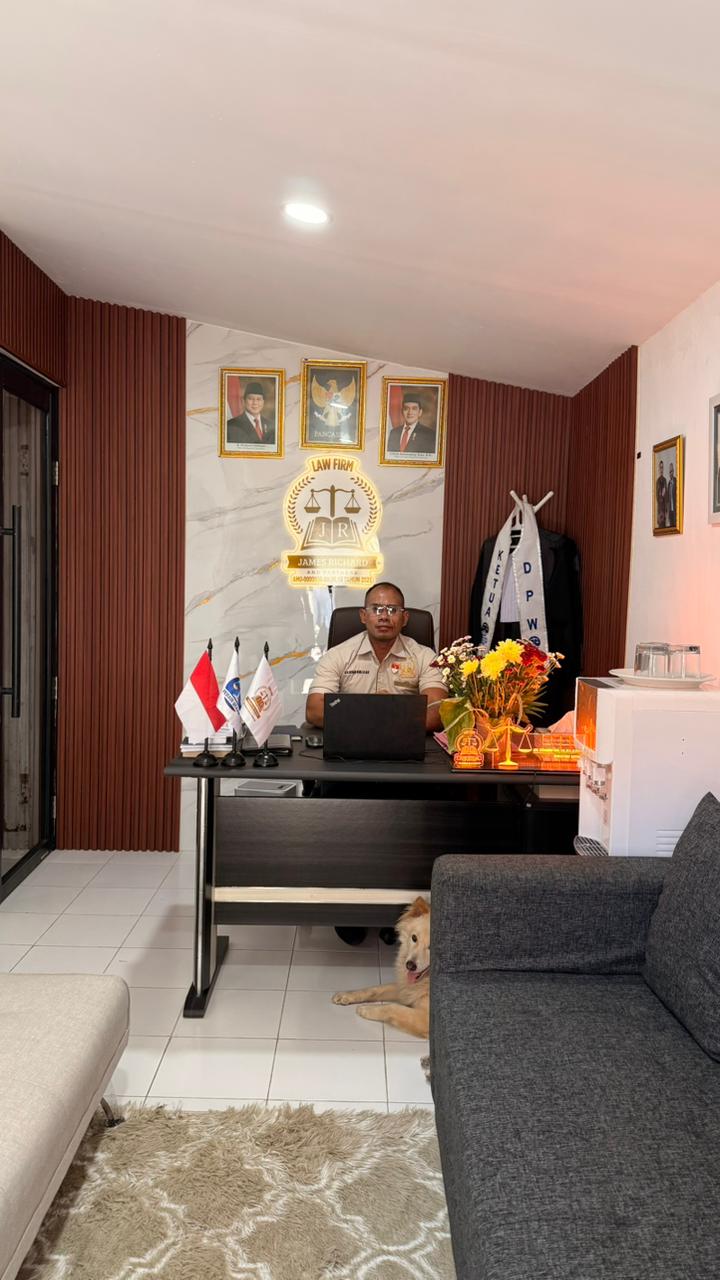
By: ATTORNEY RIKHARDUS IKUN, S.H., M.H., C.MSP., C.NSP., C.LFS., C.CPr.
I. LEGAL ISSUES
A property dispute is a legal conflict concerning ownership, possession, transfer of rights, sales and purchase agreements, or the use of land and buildings.
Such disputes may arise due to overlapping certificates, breach of contract in a sale and purchase agreement, unauthorized possession of property, unlawful acts (PMH), or actions by one party that fail to fulfill obligations as agreed upon.
II. LEGAL BASIS
Several legal provisions that can serve as a basis for resolving property disputes include:
1. Law No. 5 of 1960 on the Basic Agrarian Principles (UUPA).
2. The Civil Code (KUHPerdata), specifically:
- Article 1234 on the form of performance.
- Article 1243 on damages resulting from breach of contract.
- Article 1320 regarding the validity requirements of a contract.
- Article 1338 regarding the binding force of a contract.
- Article 1365 regarding Unlawful Acts.
3. Government Regulation No. 24 of 1997 on Land Registration, as amended.
4. Government Regulation No. 18 of 2021 on Management Rights, Land Rights, Apartment Units, and Land Registration.
III. LEGAL ANALYSIS
From a civil law perspective, the resolution of property disputes must first consider the validity of the title, ownership status, history of title transfers, and the legal relationship between the parties.
If a dispute arises because one party fails to fulfill its obligations under an agreement, the aggrieved party may file a breach of contract lawsuit.
However, if there is unlawful possession or use of the property that causes harm to another party, a tort action may be pursued as provided for in Article 1365 of the Civil Code.
Evidence in property dispute cases must be supported by ownership documents, land certificates, deeds of sale, agreements, proof of payment, land-related documents, and other relevant evidence.
IV. LEGAL REMEDIES
Regarding property disputes, the legal steps that may be taken include:
1. Conducting an examination and verification of the legality of property ownership documents.
2. Seeking a resolution through negotiation or mediation.
3. Filing a civil lawsuit for breach of contract or tort, depending on the facts of the case.
4. Filing a motion for a provisional attachment if legal requirements are met.
5. Pursuing further legal actions in accordance with applicable laws and regulations.
V. CONCLUSION AND LEGAL OPINION
Based on the foregoing, property disputes must be resolved by first identifying the legal status of the disputed property and the legal relationships between the parties.
Any party claiming rights to a property is obligated to prove the legal basis for its ownership in accordance with the law.
If a breach of contract or an unlawful act is found that causes harm to another party, the aggrieved party has the right to pursue legal remedies through either litigation or non-litigation channels.
Thus, the resolution of property disputes must prioritize legal certainty, the protection of property rights, justice, and the principle of legal utility.
This Legal Opinion is prepared as an initial legal opinion, while taking into account the facts, documents, and concrete evidence in the case in question.